GTA 6 and Sam Houser: can Rockstar's president deliver?

Grand Theft Auto VI is now less than four months out — Take-Two reaffirmed the November 19, 2026 date in its fourth-quarter fiscal 2026 results on May 21 — and the man ultimately answerable for it is a 54-year-old Londoner who has not shipped a Grand Theft Auto in 13 years, has not shipped anything at all in nearly eight, and has never made one of these without his brother.
That man is Sam Houser, Rockstar Games' co-founder, president and executive producer. He does not do interviews, does not appear at showcases, and has issued roughly one paragraph of public comment about GTA 6 in the two and a half years since it was announced. So the question of whether he can still land a game this size has to be answered the way you'd answer it about any other executive who won't talk: from the record.
What follows is analysis, not reporting of new facts. Every claim below is sourced and linked; the judgements drawn from them are inferences, and they are flagged as such.
Who Sam Houser actually is
Houser was born in London in November 1971 — he turns 55 the same month GTA 6 is due — and joined Bertelsmann Music Group's post room in 1990. By 1996 he was head of development at BMG Interactive, the label that published the original Grand Theft Auto. In December 1998 he co-founded Rockstar Games in New York with his brother Dan, Terry Donovan, Jamie King and Gary Foreman. He has been president ever since, and executive producer on every Grand Theft Auto from GTA III onward.
Two things matter about that biography. The first is that his authority is founder authority, not hired-CEO authority — nobody at Rockstar outranks him creatively, and Take-Two has historically not tried to. The second is that he has spent 28 years deliberately building a company whose brand is bigger than any individual in it. Both brothers have consistently avoided the press in favour of the Rockstar logo doing the talking.
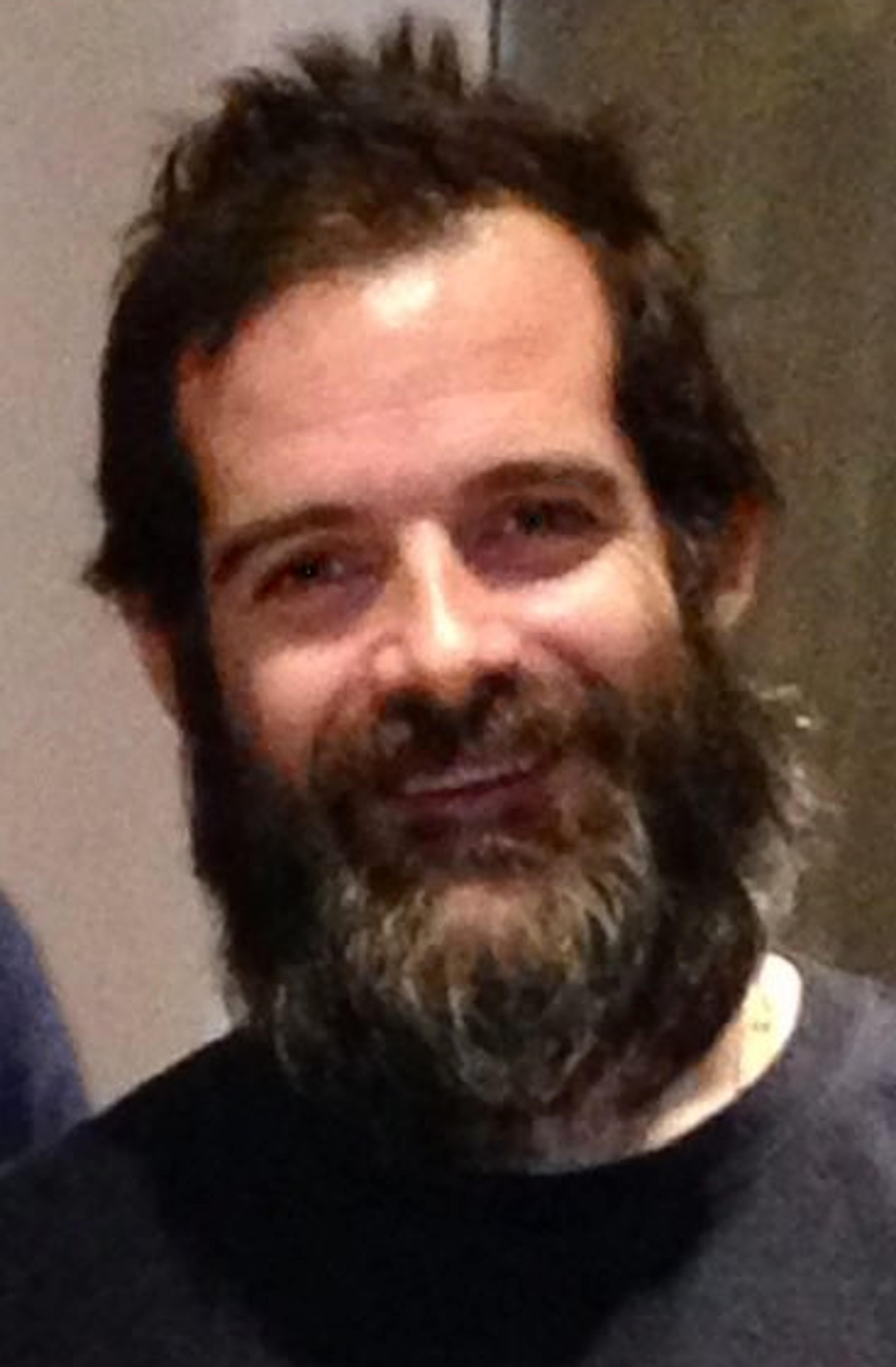
That invisibility is why public perception of him is unusually thin and unusually polarised. To most players he is an abstraction — either the auteur who made the best open worlds ever built, or the boss of a studio that has spent the last decade making headlines for labour disputes rather than games. Both readings are drawing on real evidence.
The track record: no flops, in the games that mattered
Start with the case for him, because it is stronger than the discourse usually admits. Houser has executive-produced a run of releases that is close to unmatched in the medium:
- Grand Theft Auto III (2001) — invented the modern 3D open-world crime game more or less wholesale.
- Grand Theft Auto IV (2008) — a 98 on Metacritic, still among the highest-rated games ever released.
- Red Dead Redemption (2010) — a critical triumph built out of a development process that, as we'll see, was close to collapse.
- Grand Theft Auto V (2013) — 97 on Metacritic, and per Take-Two's reported figures more than 225 million copies sold, making it the second best-selling game in history.
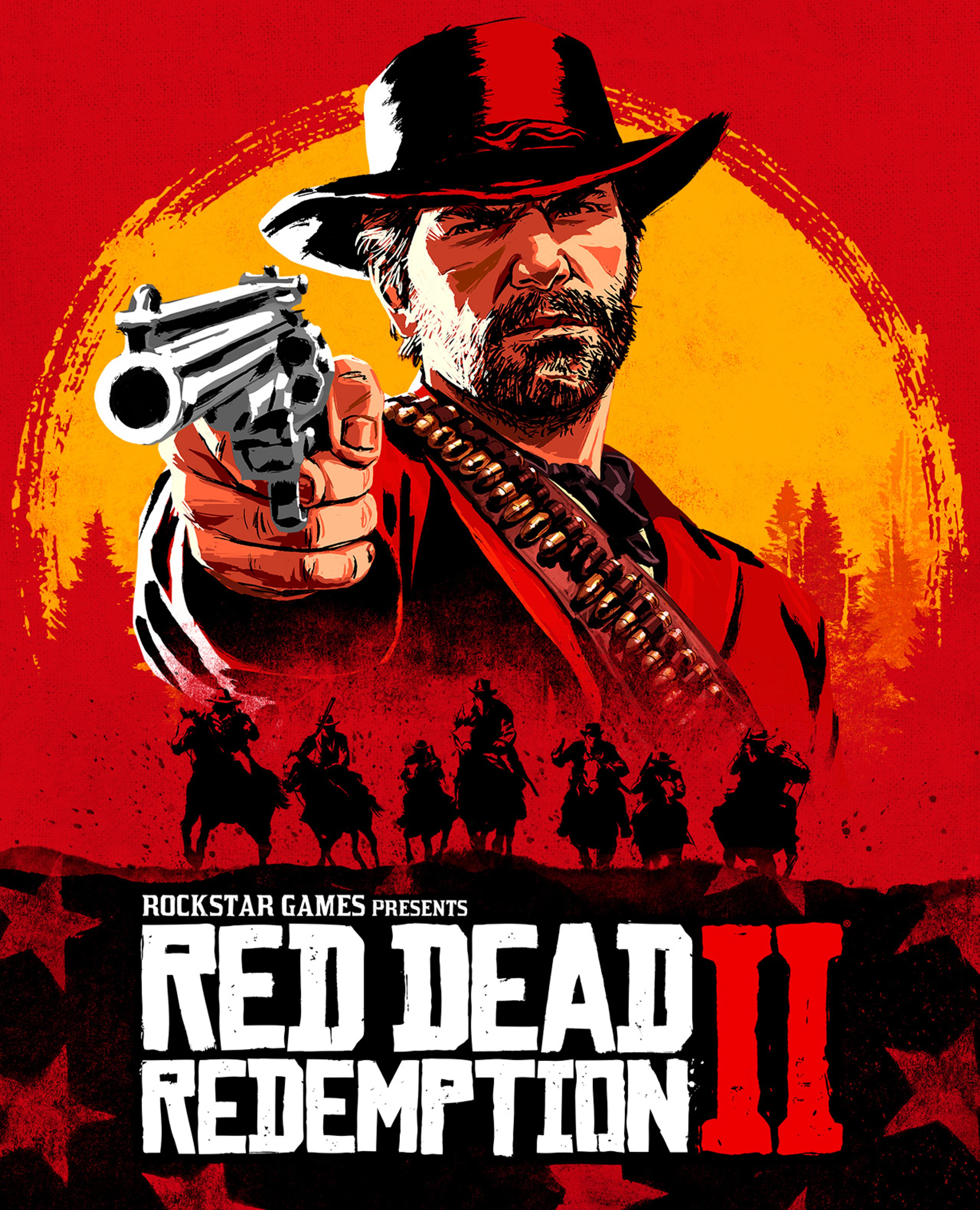
- Red Dead Redemption 2 (2018) — 97 on Metacritic and, per Take-Two's reporting, more than 85 million copies.
Five swings across 17 years, five hits. There is no Cyberpunk 2077 in that list, no Anthem, no Redfall. Whatever else is true about how Rockstar makes games under Houser, the finished products have not historically arrived broken or unloved.
Are his instincts stale?
This is the sharpest version of the worry, and it deserves a real answer rather than a reflexive defence. Grand Theft Auto has always worked as satire of contemporary America. GTA V landed in 2013 and skewered post-crash Los Angeles, tech-bro self-help and reality television. The person steering the sequel is now a multi-millionaire in his mid-fifties living in Brooklyn, running a studio he has controlled since the Clinton administration. Satire written from that position can very easily land a decade late.
The available counter-evidence is the marketing itself. Trailer 2, released in May 2025, is built around short-form video, influencer culture and phone-shot footage rather than the talk-radio-and-billboards register of the older games. That is a deliberate tonal update, and it is at least evidence that somebody in the building is looking at 2026 rather than 2013.
The more important point is structural: Houser has never been the sole author of a Grand Theft Auto, and treating GTA 6 as one man's worldview is a category error. Art direction has run through Aaron Garbut since GTA III. Rob Nelson is co-studio head. Michael Unsworth and Rupert Humphries — who wrote GTA IV and GTA V alongside Dan Houser — are still there. Houser's job is taste and veto, exercised over the output of thousands of people, many of them decades younger than him.
The honest read: "stale" is a real risk on tone and comedy, which are the things a 54-year-old executive's veto is most likely to distort. It is a much weaker risk on craft, structure and world-building, where the machine around him has been iterating continuously and where Rockstar's advantage has always actually lived.
Can he execute? The 2009 emails are the best evidence available
The most useful window into how Houser actually runs a project came out of litigation. When former Rockstar North president Leslie Benzies sued Take-Two in 2016, his legal team filed internal emails from October 2009, during the final stretch of the original Red Dead Redemption. They were reported at the time, and they are not the emails of a serene visionary.
This is a (recurring) nightmare. But one i/we need to get out of.
PLEASE help me/us get rdr into shape. I am a jabbering wreck right now. I need The Benz!
"The Benz" is Benzies. Read one way, this is damning: the president of Rockstar, months from shipping, describing himself as a wreck and pleading for a lieutenant to rescue the project. Read another way — and this is the reading the outcome supports — it is what nine months out from a Rockstar release looks like from the inside, every time. Red Dead Redemption shipped in May 2010 to some of the best reviews of that console generation.
The load-bearing caveat is that the rescue Houser was asking for came from Benzies, who left in 2015, and from Dan Houser, who left in 2020. The pattern in the emails is a president who escalates late and relies on a small circle of trusted deputies to convert panic into a shipped game. That circle is now materially different people.
The failures and controversies that could still shape GTA 6
Five things in Rockstar's recent history are worth weighing, in rough order of how much they plausibly bear on November 19.
- The union dismissals and the September tribunal. Rockstar dismissed more than 30 UK and Canadian staff on October 30–31, 2025. The company says it was gross misconduct involving leaked confidential information; the IWGB union says the workers were targeted for organising and has brought legal claims including blacklisting. In June 2026 a tribunal refused Rockstar's attempt to strike those allegations out, and the full hearing runs September 10 to October 15, 2026 — concluding roughly five weeks before launch. Nothing has been proven either way, but the timing means Rockstar's biggest marketing window overlaps a trial about how it treats its developers.
- Dan Houser's absence. Dan left in 2020 and has confirmed he had no involvement in GTA 6's story, while predicting it will be good anyway: "not going to be a story I wrote or a character set that I developed, but I think it's going to be exciting." This is the first Grand Theft Auto in which Sam's taste is not being filtered through his brother's writing.
- GTA: The Trilogy — The Definitive Edition (2021). The remaster collection launched broken enough that Rockstar pulled the PC version and apologised. The work was outsourced to Grove Street Games rather than made in-house, but it went out under the Rockstar name — proof that the quality guarantee attaches to Rockstar's own production pipeline, not to the logo.
- The crunch reckoning of 2018. Dan Houser's remark that the team had been "working 100-hour weeks" on Red Dead Redemption 2 triggered a backlash he then narrowed to the four-person senior writing team over three weeks. Current staff disputed the implication that overtime was voluntary. Rockstar has made policy changes since, including a five-day return-to-office mandate in 2024 framed partly around delivering the next GTA.
- The Benzies litigation. Benzies sued for $150 million in 2016, alleging he was pushed out and accusing Sam Houser personally of "lengthy deception". Rockstar counter-sued and rejected the account. Twelve of eighteen claims were dismissed in 2018 and the case settled confidentially in February 2019. No allegation against Houser was tested at trial, and it should not be treated as established — but it did cost Rockstar the deputy Houser had leaned on hardest.
The real risks for November 19
The delay history is the cleanest signal available, and it cuts against Rockstar's schedule rather than its quality. GTA 6 has moved twice — from a 2025 window to May 26, 2026, and then to November 19, 2026 — and Rockstar has delayed very nearly every major game it has made. Its stated reason last November was polish: "these extra months will allow us to finish the game with the level of polish you have come to expect and deserve." That is the same instinct visible in the 2009 emails, and historically it has produced good games and bad dates.
Set against that, the commercial machinery has now committed hard. Pre-orders opened on June 25, 2026 at $79.99 for the standard edition and $99.99 for the ultimate, digital-only at launch on PS5 and Xbox Series X|S, with no PC date announced. Take-Two has guided to $8.0–8.2 billion in net bookings for the year, with CEO Strauss Zelnick saying fiscal 2027 "will establish new record levels of operating performance driven by the November 19th launch". A third delay would now break a taken pre-order and a public financial forecast, not just a marketing beat.
Two genuine unknowns remain as of late July 2026. Rockstar has still not shown extended unedited gameplay — only trailers — and a third trailer has been widely expected for weeks without being dated. Until gameplay is public, nobody outside Rockstar can independently assess how finished this thing is, and reporting on its state has been contradictory.
The verdict
On the narrow question — will GTA 6 be good? — the record points one way. Houser has never shipped a bad Grand Theft Auto, his process has always looked like a crisis from the inside, and the parts of Rockstar that produce craft rather than jokes are largely intact and led by the same people who built GTA V and Red Dead Redemption 2. Betting against that is betting against the longest hit streak in the medium.
The defensible worries are narrower and more specific than "he's lost it". Tone and humour are where an ageing veto is most likely to show, and it is the first GTA script without Dan Houser. The trusted deputies who historically converted Houser's late-stage panic into a shipped game are not the same people. And the date, not the quality, is what Rockstar's own history says to doubt.
Houser's only substantial public statement on the game remains the line he gave when it was announced in December 2023: Grand Theft Auto VI "continues our efforts to push the limits of what's possible in highly immersive, story-driven open-world experiences". He has said nothing since. On his record, that silence is normal. It is also, at this point, the last thing anyone outside Rockstar has to go on.
What to watch next
- Take-Two's first-quarter results on August 7, 2026 — the next scheduled opportunity to reaffirm or move the date, and the first look at pre-order performance.
- Trailer 3, still undated, and specifically whether it contains real gameplay rather than cutscene-grade footage.
- The IWGB tribunal, September 10 to October 15, 2026, which will put Rockstar's internal culture in front of a judge during the launch run-up.
- Any PC or Nintendo Switch 2 announcement — neither has a date, and both would signal how Rockstar is pacing the post-launch years.


